
Susan E. Whyman
Historian of Early Modern Britain
Prize-winning historian, whose work explores everyday life, literacy, social networks and
social mobility in British culture and society



BOOKS
Acclaimed works published by Oxford University Press exploring British culture and society.
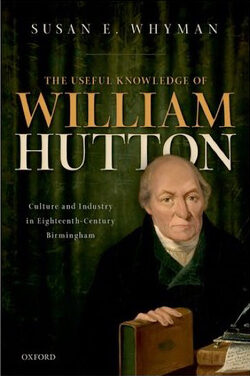
The Useful Knowledge of William Hutton: Culture and Industry in Eighteenth-Century Birmingham
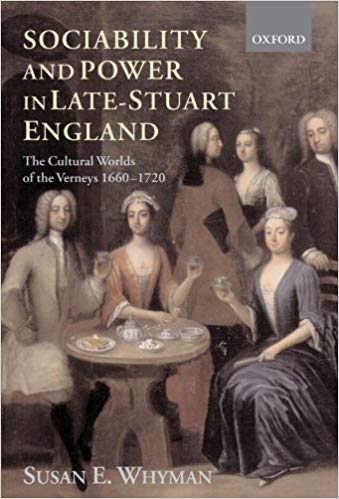
Sociability and Power in Late-Stuart England: The Cultural Worlds of the Verneys 1660-1720
NEW PUBLICATION – open access, just click on the link.
Edmund Rack: Master of knowledge, scientific societies and social networks in Eighteenth-century Bath, Published in Urban History online by Cambridge University
Press: 05 March 2026 https://www.cambridge.org/core/journals/urban-history/article/edmund-rack-master-of-knowledge-scientific-societies-and-social-networks-in-eighteenthcentury-bath/65E46FC3E04E5F2F9BCB84DD3D736F60
This article presents Bath – a spa town known for scandal – as an urban crucible for global visitors, ideas and cultural brokers like Edmund Rack, a Quaker and former shopkeeper (1736–87). Rack seized opportunities to use his social networks to forge a scientific community in Bath. A study of members of Rack’s Bath Philosophical Society shows science was a pathway to social mobility for dissenters, physicians and men of marginal backgrounds. Scientific knowledge became the property of non-elites, whose interests overrode socio-economic differences. The impact of knowledge brokers and Bath on eighteenth-century social and urban history is, thus, seen anew in its local, national and global contexts.
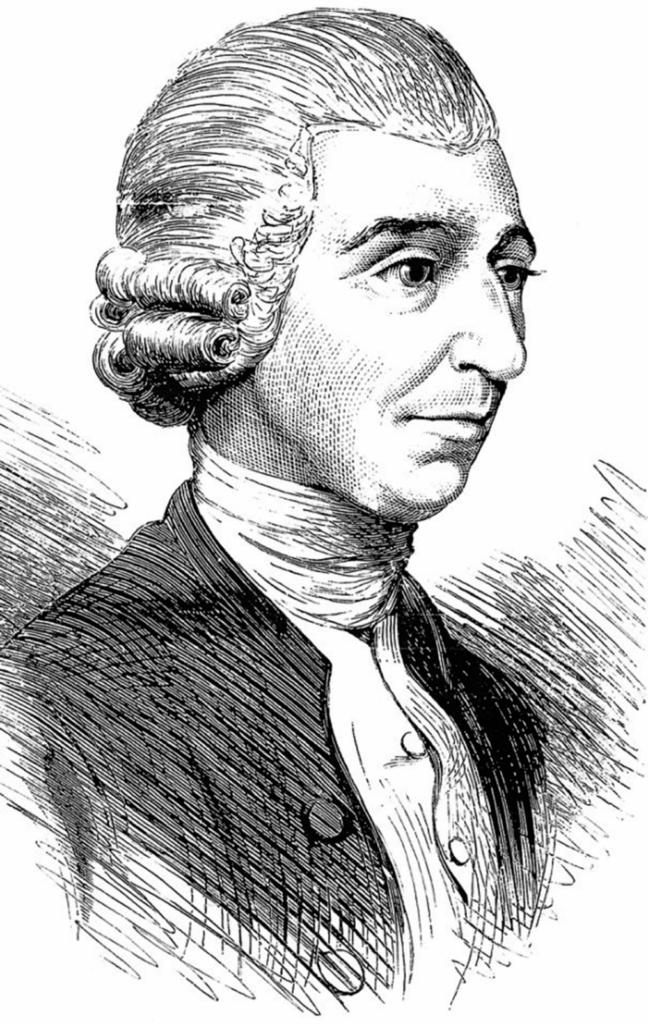
Portrait of Edmund Rack, founder of the Bath & West Agricultural Society, by Lewis Vaslet (1781).
Articles
- The Man who did this was born without a Shirt’, in Sarah Lloyd and Timothy Millett (eds.), Tokens of Love, Loss and Disrespect 1700-1850 (London: Paul Holberton Publishing, 2002), 189-206
- John Baskerville, William Hutton and their Social Network’s, in Caroline Archer-Parré and Malcolm Dick (eds), John Baskerville: Art and Industry in the Enlightenment (Liverpool: Liverpool University Press, 2017), 87–112
- ‘The pleasure of writing is inconceivable: William Hutton as an Author.‘ Authorship 4:1 (2015).
- ‘William Hutton–Master of Words’, West Midlands History, 1:3, (2013), 8-11
- ‘A Passion for the Post’, History Today, December, 2009, 33-39
For 400 years the delivery of letters has been integral to British life. As Royal Mail confronts an uncertain future, Susan Whyman charts the Post Office’s development and discovers, through the correspondence of ordinary people, just how much letter writing meant to them. - ‘Letter Writing and the Rise of the Novel: The Epistolary Literacy of Jane Johnson and Samuel Richardson’, Huntington Library Quarterly, 70:4, (2007), 577-606
In his widely known study of the novel, first published in 1957, Ian Watt linked the rise of the genre to the emergence of a middling-sort reading public. This new audience lacked formal education - ‘The Correspondence of Esther Masham and John Locke: A Study in Epistolary Silences’, Huntington Library Quarterly, 66:3-4 (2004), 275-305
In 1722, Esther Masham, a 47-year-old Essex spinster, was copying letters into a book. On the first page she inscribed the title: ‘Letters from Relations & Friends to E Masham, 1722 Book 1’.
- ‘Advice to Letter-Writers: Evidence from Four Generations of Evelyns’, in John Evelyn and His Milieu, eds., Frances Harris and Michael Hunter (London: British Library, 2003), 255-66
Let us observe the ten-year-old son of John Evelyn as he writes a letter in 1665. There is no letter-writing manual at hand, just a pen made from the third left feather of a goose and a pot filled… - ‘Gentle Companions: Single Women and their Letters in Late Stuart England’, in James Daybell, ed., Women’s Letter Writing in England (Houndmills, Palgrave, 2001), 177-193
- ‘Paper Visits”: The Post-Restoration Letter As Seen Through the Verney Archive’, in Rebecca Earle, ed., Epistolary Selves: Letters and Letter Writers 1600-1945, (Aldershot: Ashgate Press, 1999), 15-36
The Verneys were an upper-gentry, Buckinghamshire family with a passionate interest in letters. - ‘Land and Trade Revisited: The Case of John Verney, London Merchant and Baronet, 1660-1720’, London Journal, 22:1 (1997), 16-32
- Oxford Dictionary of National Biography: articles on members of the Verney family, Edmund Verney (1590-1642), Ralph Verney (1613-1696) and John Verney (1640-1717).
- ‘Is the Handwritten Letter A Thing of the Past?’, The Independent (London) Feb 2000